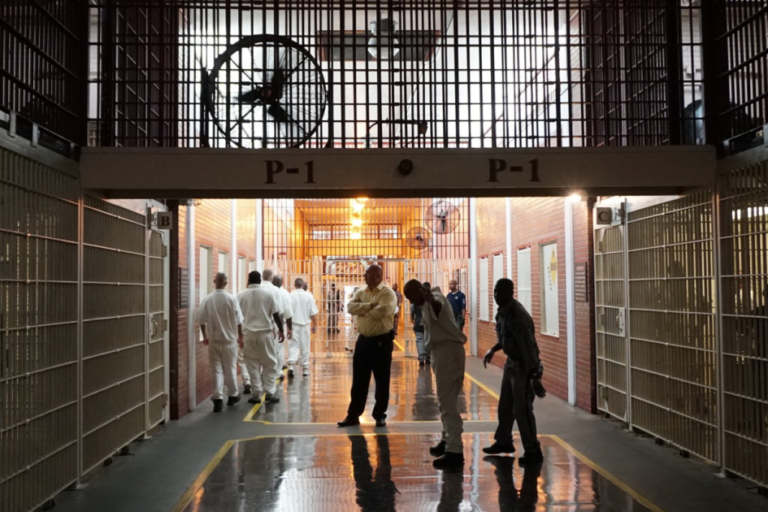
After nearly half a century on Texas death row, Clarence Curtis Jordan was resentenced this week to life in prison by a Harris Countyjudge who also recommended that the 70-year-old be granted parole based on medical conditions.
Read more Proposed ban on Big Bend border wall fails in U.S. House funding panel
The intellectually disabled man spent more than 47 years awaiting execution before Texas’ highest criminal court vacated his death sentence earlier this year, ruling that jurors were not adequately instructed that his mental and neurological conditions should be considered as mitigating factors when deciding his punishment.
On Monday, state District Judge Katherine Thomas re-sentenced Jordan to life in prison with the possibility of parole. Thomas also recommended that he be evaluated for, and granted, medically recommended intensive supervision, which early parole based on medical issues including old age, terminal conditions and substantial mental illness.
The Texas Board of Pardons and Paroles, which for medical parole, said Tuesday it had no comment or responsive information to The Texas Tribune’s inquiry on Jordan.
In 1978, Jordan was convicted of murdering Houston grocer Joe L. Williams. The conviction was overturned, but a jury once again convicted Jordan in 1983 and assessed the death penalty — despite a defense expert who testified that Jordan had brain damage and paranoid schizophrenia.
In 1988, the Texas Court of Criminal Appeals barred Jordan from lethal injection until he could be declared competent for execution. But lacking a lawyer to advocate on his behalf, Jordan languished for decades on death row.
Read more Abbott recommends sweeping data center regulation, including eliminating sales tax exemption
“He was warehoused and forgotten all of these years unconstitutionally,” said Ben Wolff, the director of the Office of Capital and Forensic Writs who became Jordan’s attorney in 2024. “I’m grateful that we’re able to do something for him.”
In a May 19 pre-sentencing memo arguing for compassionate release, Wolff outlined Jordan’s medical conditions.
“In effect, he is blind, mute, confined to a hospital bed or chair, captive not only of his life-long mental illness and neurological disabilities, but his deteriorated physical and cerebral condition,” the memo said.
Jordan is currently housed in the Estelle Unit in Huntsville, which has a prison hospital, according to the Texas Department of Criminal Justice.
Read more Texas high schoolers show gains across all subjects on STAAR tests
About the Author